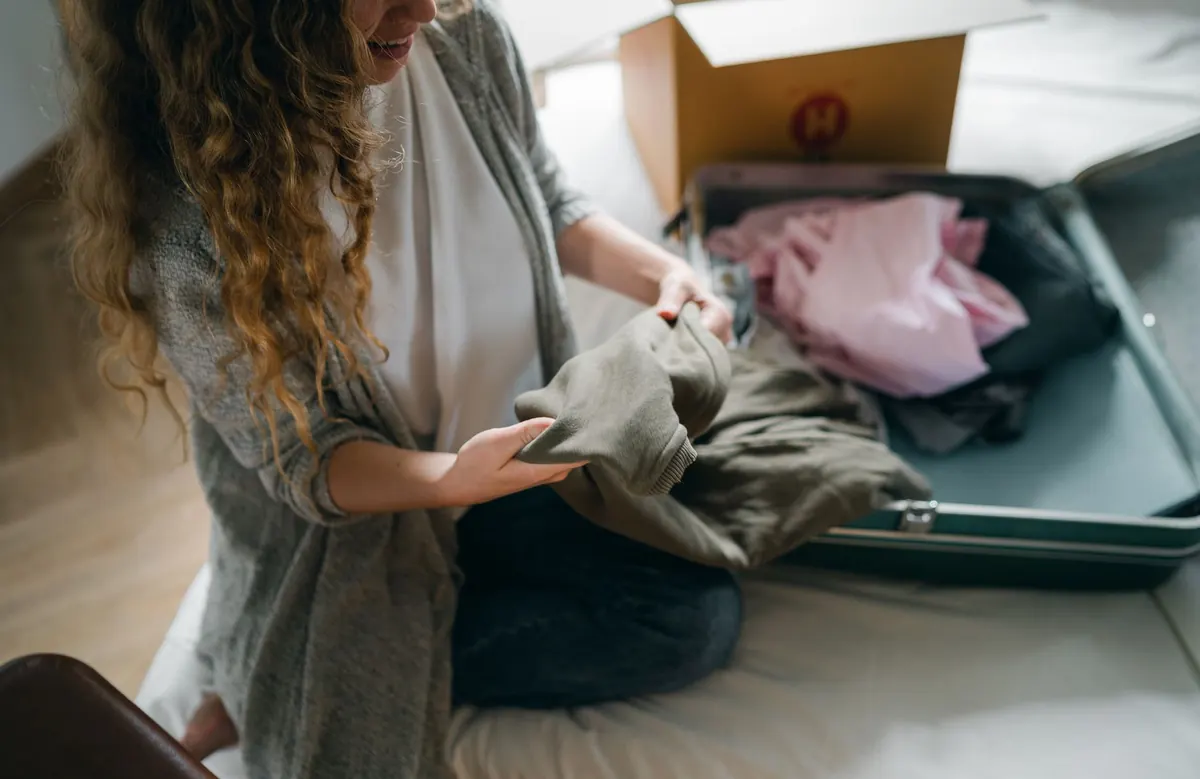
Two weeks away with a single cabin bag sounds like a stunt until you try it once. After that it becomes the obvious choice: no check-in queue, nothing lost in transit, no standing at the carousel while your holiday drains away. The trick isn't a magic folding technique. It's deciding what you need before you open the wardrobe, and accepting that a fortnight of outfits does not require a fortnight of clothes. Here is the method, the maths, and a checklist you can print and tick off.
Know your airline's limits before you pack a thing
Cabin allowances vary far more than most people expect. A common size is around 55 x 40 x 20 cm, but budget carriers frequently shrink the free allowance to a small bag that fits under the seat in front of you, and weight limits of 7–10 kg are typical. Two bags on the same route can differ, so check the airline's own baggage page rather than a comparison site that may be months out of date.
The two-bag distinction
Many fares include a small personal item under the seat and a larger cabin bag for the overhead locker. Others include only the personal item. If you're on the second kind of fare, either pay for the cabin bag or plan your packing around something closer to 40 litres. Then measure your bag with a tape measure, including wheels and handles, and weigh it on your bathroom scales while holding it — or buy a cheap luggage scale. Turning up two centimetres over the limit is an expensive way to learn this lesson.
Build a capsule wardrobe, not a suitcase
The capsule is the whole game. Everything you take should work with everything else, so a fortnight of combinations comes out of a fortnight of thought.
- Three colours, one of them neutral. Navy, grey or stone as the base, then two colours you actually like. Nothing enters the bag unless it matches at least three other pieces.
- Pack seven days, not fourteen. Plan on one laundry session per week — a hotel sink, a launderette, or a service wash. That single decision halves your load.
- Tops outnumber bottoms roughly two to one. Four bottoms (trousers, jeans, shorts, a skirt) and seven or eight tops will comfortably cover two weeks.
- Choose fabric with intent. Merino wool, quick-drying synthetics and lightweight linen blends are worth the money. Heavy cotton and stiff shirts are not.
- Two pairs of shoes maximum, one of them on your feet on travel day. Wear the bulkier pair.
- Layers beat coats. A thin thermal, a mid-layer and a packable rain shell handle most weather in the UK, Ireland and northern Europe from spring to autumn.
The packing method, step by step
- Check the forecast for your destination and adjust the layers, not the quantity.
- Lay everything on the bed. Seeing it all at once is what stops you packing "just in case" items.
- Cut it by a third. Be ruthless. Most people pack roughly 50 per cent more than they wear.
- Write out days one to fourteen and assign an outfit to each. Anything without a day goes back in the wardrobe.
- Decant toiletries into small refillable bottles and switch to solids where you can.
- Use packing cubes or compression bags. Roll soft items; fold anything structured, like a blazer, and place it flat on top.
- Load the heavy items at the base or wheel end, near your back when it's a rucksack. Keep the top third light.
- Wear the bulkiest clothes on travel day. Nobody at security cares that you've worn the same jacket three trips running.
- Leave a tenth of the bag empty. You'll need it for laundry, snacks or something you buy on day three.
Liquids at UK airports
The long-standing rule is that liquids, gels, pastes and aerosols must be in containers of no more than 100 ml, carried in a single clear resealable bag of about one litre, one bag per passenger. The important detail most people miss is that it's the container size that counts: a 200 ml bottle half full is not allowed.
Some UK airports have installed newer scanners that permit larger containers, and others have changed their arrangements back and forth as equipment rollouts have progressed. Because it differs by airport, and occasionally by terminal, check your departure airport's own security page and your airline's guidance in the day or two before you fly rather than relying on a rule you read last year.
- Switch to solids: shampoo bars, solid deodorant, soap, toothpaste tablets.
- Label your decanted bottles so you aren't guessing at a hotel sink.
- Keep prescription medicines in their original packaging with a copy of your prescription, and check with your airline in advance.
Security rules are set by the airport and by government regulation, so treat the above as general guidance and confirm the specifics for your own journey. If you have medical needs or unusual items, contact the airport's security or assistance team directly.
Your printable checklist
- Clothing: 7–8 tops, 4 bottoms, 1 dress or mid-layer, 1 packable rain shell, 1 thin thermal, 8 pairs socks and underwear, 1 swimsuit, 1 pair sleepwear, 2 pairs shoes, 1 belt, hat and sunglasses.
- Toiletries: shampoo bar, soap, deodorant, toothbrush and tablets, razor, moisturiser, SPF, any medication, small nail scissors, 1-litre clear liquids bag.
- Tech: phone, charger, universal adaptor, power bank in hand luggage, e-reader, earbuds, one spare cable.
- Documents: passport, boarding passes, travel insurance details, accommodation address, bank cards, copies photographed and stored offline.
- Extras: refillable water bottle, folded tote, laundry sheets, small sewing kit, painkillers, eye mask, spare glasses.
Packing is the easy part: living out of one bag
Once you arrive, keep the discipline going. Unpack into drawers if you have them, because a bag you live out of becomes a bag you rummage through. Do laundry on day four or five rather than the night before you come home, so everything has time to dry. Repack the night before your return flight, not the morning of it. And if you're tempted to buy a second bag for souvenirs, remember that a foldaway holdall counts as an extra item unless it's empty and packed inside your cabin bag — so plan for it or post things home. Take a photo of your packed bag's contents before you zip it; it's a useful record if anything goes missing. Do all that, and your only remaining worry is what to do with two free hours at the airport while everyone else queues at the carousel.
Photo: Ketut Subiyanto / Pexels