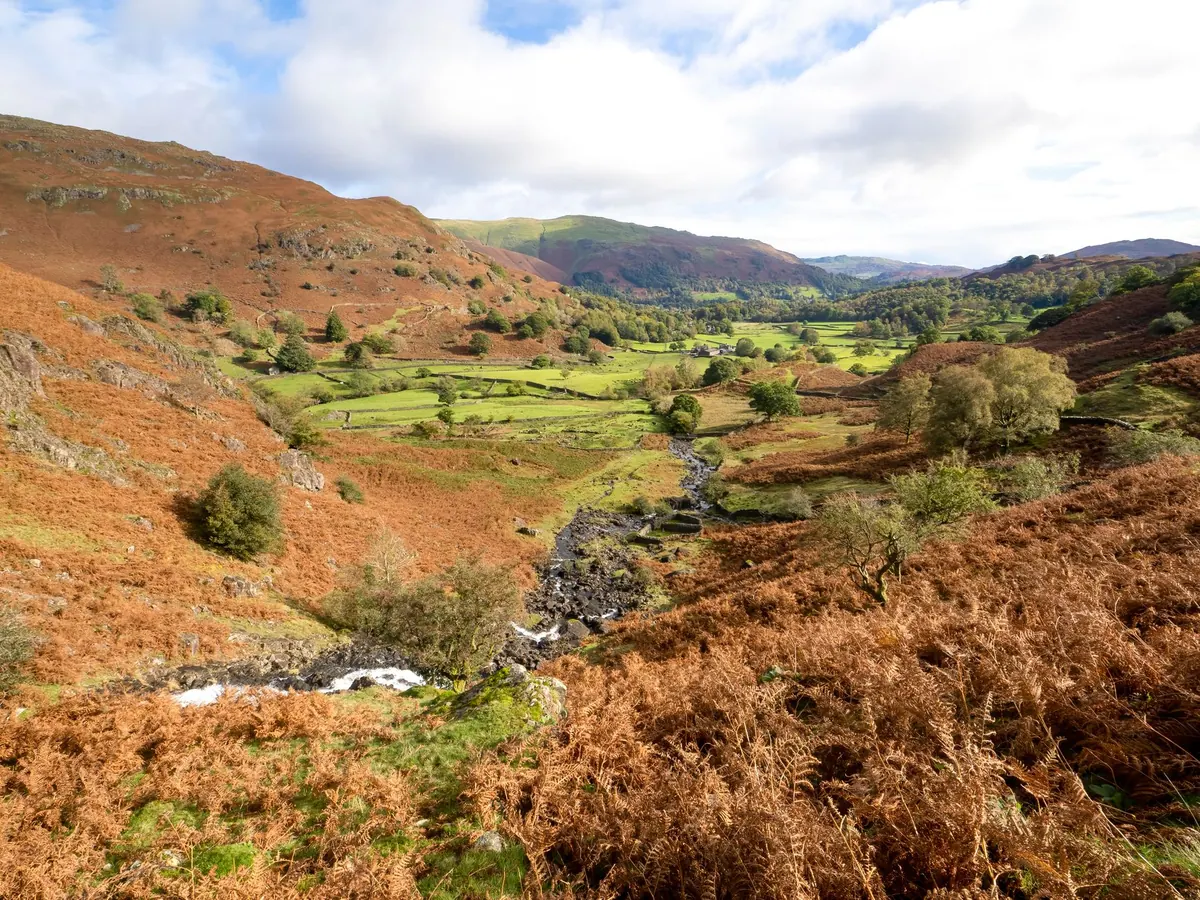
October in the Lake District behaves like two seasons in one day. The valleys sit under mist until mid-morning, then clear to show oak and birch turning copper above the water. The fells above 600 metres are cold enough for the first frost of the year, and the midges have finally packed up. Crowds thin out once the school holidays end in early September, though half term brings a second, shorter burst.
This three-day route mixes gentle valley walking with two manageable fell days. Each one starts and finishes within a short drive of a pub, and each has a wet-weather plan attached for the days when the cloud drops and stays put.
Before You Go: Parking, Timing and Kit
Autumn parking in the Lakes rewards early risers. Popular village car parks are often full by 10am, and half term makes it worse.
- Arrive before 9.30am at Grasmere, Buttermere or Hawes End. If a car park is full, drive on and take the next village rather than circling.
- Carry coins and a card. Most car parks are pay and display. National Trust members park free at Trust car parks with a valid membership card.
- Dress for wet ground. Waterproof boots with proper tread, a shell, a spare fleece and a head torch. Fell paths hold water in October and the rock gets greasy.
- Take a paper map. OS Explorer OL7 covers Grasmere and Ambleside; OL4 covers Buttermere and Keswick. Phone signal on the fells is patchy at best.
- Book tables and beds. In half term, evening meals and rooms go quickly. Ring ahead rather than hoping.
If you have a heart or breathing condition, or you are new to hill walking, have a word with your GP before committing to a fell day. Tell someone where you are going and when you expect to be back.
Day 1: Grasmere, Rydal Water and the Coffin Route
Start in Grasmere. Broadgate and Stock Lane car parks both sit within a few minutes of the village centre, and both fill early. From the village, follow the signed path east towards Rydal — the old coffin route, a gently undulating track that traders and mourners used for centuries to carry their dead between the two settlements. It is one of the loveliest low-level walks in the Lakes and it barely climbs.
Pass Rydal Mount, where Wordsworth lived for the last 37 years of his life, then drop to the shore of Rydal Water. Follow the water's edge west to White Moss, then climb the short, steep pull onto Loughrigg Terrace for the best view of the day: Grasmere below, Helm Crag ahead, the whole vale in autumn colour. A short detour from the terrace leads to Rydal Cave, a flooded old slate quarry that swallows the light on grey afternoons — the floor inside is slippery, so take it slowly.
Return to Grasmere by dropping off the terrace and following the path past the foot of Loughrigg Fell. Around six miles in total, with one short climb. Pint at the Badger Bar in Rydal if you pass it early, or the Traveller's Rest on the edge of Grasmere at the end.
Day 2: Buttermere and Rannerdale Knotts
Drive over Dunmail Raise and Honister Pass, or come round by Keswick, and park at the National Trust car park in Buttermere village or at Gatesgarth at the head of the lake. The valley is quieter than Ambleside and the autumn colour along the shore is superb.
Morning: the lake circuit, about four and a half miles, mostly flat, passing through a short tunnel cut in the rock on the northern shore. Allow two hours and stop often.
Afternoon, if the weather holds: Rannerdale Knotts, 355 metres, straight from the village. The climb is short but steep, and the ridge gives you Crummock Water on one side and Buttermere on the other. In May this slope is famous for bluebells; in October it is rust-coloured bracken and very few people. Roughly two and a half miles and an hour and a half at an easy pace.
Evening: the Fish Inn or the Bridge Hotel in Buttermere. The Kirkstile Inn at Loweswater is a short drive west and worth the detour, but book in half term.
Day 3: Catbells and Keswick
Catbells, 451 metres, is the classic half-day fell: one honest pull from Hawes End, then a gentle ridge to the summit with Derwentwater laid out below. The Hawes End car park is small, so a better plan is to take the Keswick Launch across the lake to Hawes End pier, walk over the fell and back to Keswick along the shore. Check the autumn timetable first — sailings reduce after October. Total around five miles.
If the cloud is low, swap Catbells for Latrigg, 368 metres, walked from Keswick. It is short, mostly on good tracks, and rewards you with the finest low-level view of the town and the lake.
Keswick finishes the day well: the Dog & Gun, the Bank Tavern and the George all do solid food, and Zeffirellis in Ambleside is a reliable option if you fancy a film afterwards.
Wet-Weather Alternatives
Autumn rain in the Lakes is not a reason to write off the day, but a fell top in poor visibility is. Keep these in reserve:
- Honister Slate Mine, at the top of Honister Pass, runs underground tours and sits right on the Day 2 driving route.
- Dove Cottage and the Wordsworth Museum in Grasmere, plus Rydal Mount, for a literary half-day.
- Hill Top, Beatrix Potter's house near Sawrey, run by the National Trust with timed entry — book before you travel.
- Keswick Museum, the Derwent Pencil Museum and the Theatre by the Lake, all within a few minutes of each other.
- The Keswick to Threlkeld path, a flat, well-surfaced old railway line of roughly four miles each way, which shrugs off rain far better than a fell. The Horse & Farrier in Threlkeld is the turnaround point.
Practical Notes for an Autumn Trip
Daylight is the thing that catches people out. By the last week of October the clocks have gone back and it is dark before 5pm. Plan to be off the fells by mid-afternoon, and carry a head torch even on a short walk.
Paths in the valleys turn muddy and the rock on fell tops can carry a thin film of ice from late October, particularly on north-facing ground. If you are unsure of conditions, ask in a local outdoor shop in Keswick or Ambleside — staff there will tell you honestly what the tops are like that day.
Three days is enough for two fells and one valley day without rushing, which is the right balance in a season when the weather can change twice before lunch. Build in a spare afternoon, keep one low-level route up your sleeve, and the trip will survive whatever the forecast throws at it.